Every social network is convinced it's the only one you use. Instagram wants
square or 4:5. TikTok wants 9:16 and a hook in the first second. LinkedIn
rewards a paragraph; X punishes one. A scheduler that ignores all this and
blasts the same asset everywhere looks efficient and performs terribly.
Cross-posting is not copy-paste
The naive model is one composer, one "post" button, six identical outputs. It
demos well and it teaches your audience that your brand has nothing
network-specific to say. The opposite extreme — a separate tool per network —
is where most teams actually live, and it's exhausting.
We wanted a third option: one idea, six native posts, from a single
composer that knows the difference between the channels.
What the composer adapts automatically
The goal is to remove busywork, not authorship. Octonity proposes
network-appropriate variants; you stay in control of every word that ships.
When you draft once, the composer handles the per-channel reality:
- Aspect ratios — it reframes the same asset to each network's preferred
crop instead of letterboxing a square into a vertical slot.
- Caption limits — it flags when your LinkedIn paragraph won't survive X,
and offers a tightened variant rather than a hard truncation.
- Best-time windows — each channel schedules into its own engagement
window, so "9am" isn't the same clock everywhere.
- Hashtag etiquette — generous on Instagram, restrained on LinkedIn.
One calendar to see it all
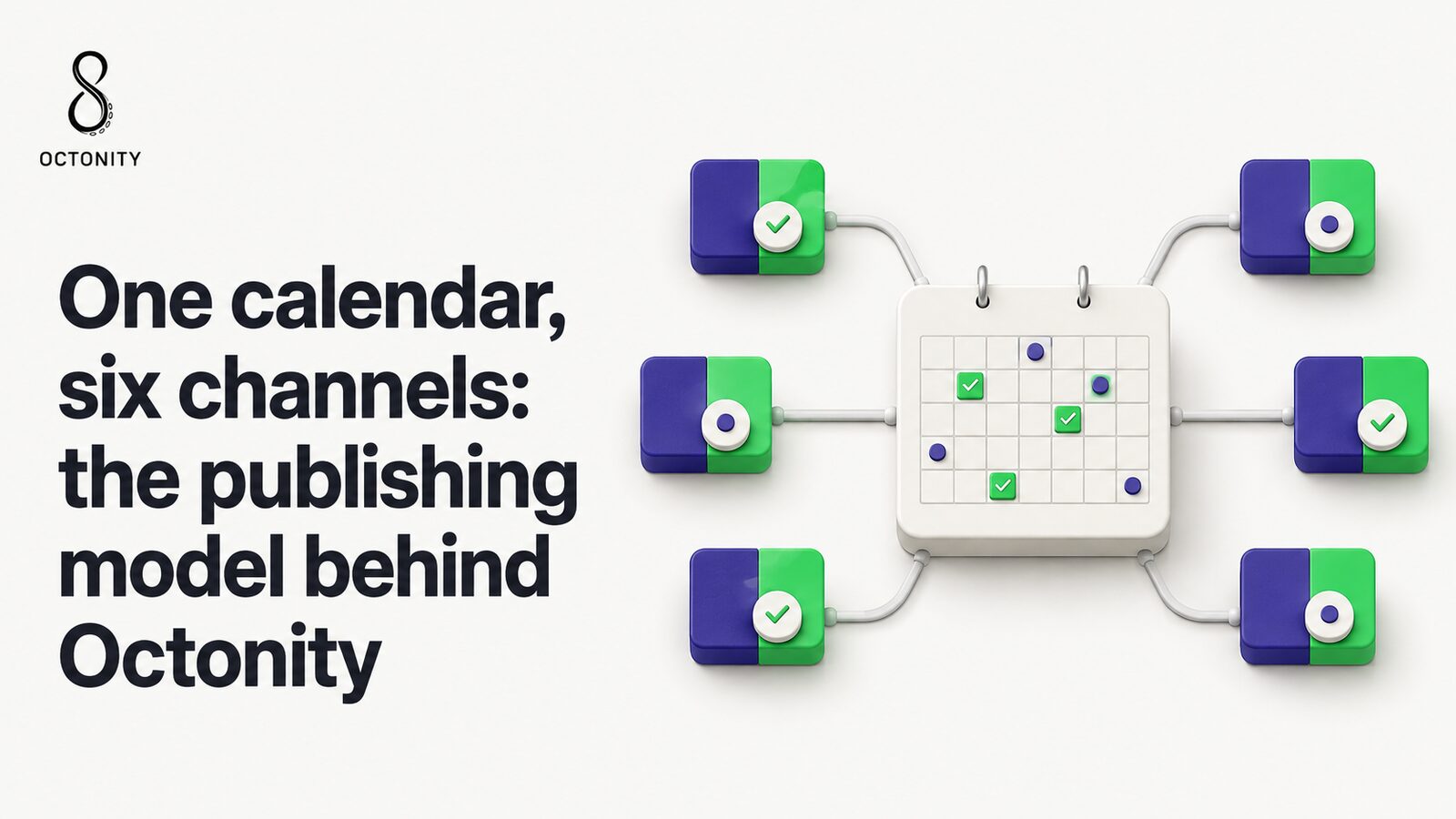
The output of all that adaptation lands on a single calendar. You see the
whole week across every channel in one grid — drag to reschedule, click to
edit the variant for just that network. The complexity is handled; it's not
hidden from you when you want it.
That's the line we try to hold: do the tedious adaptation for you, but never
pretend the channels are the same when they aren't.
Try Octonity for your team
Plan, create, and publish across every channel from one workspace. Free plan available — no credit card.